

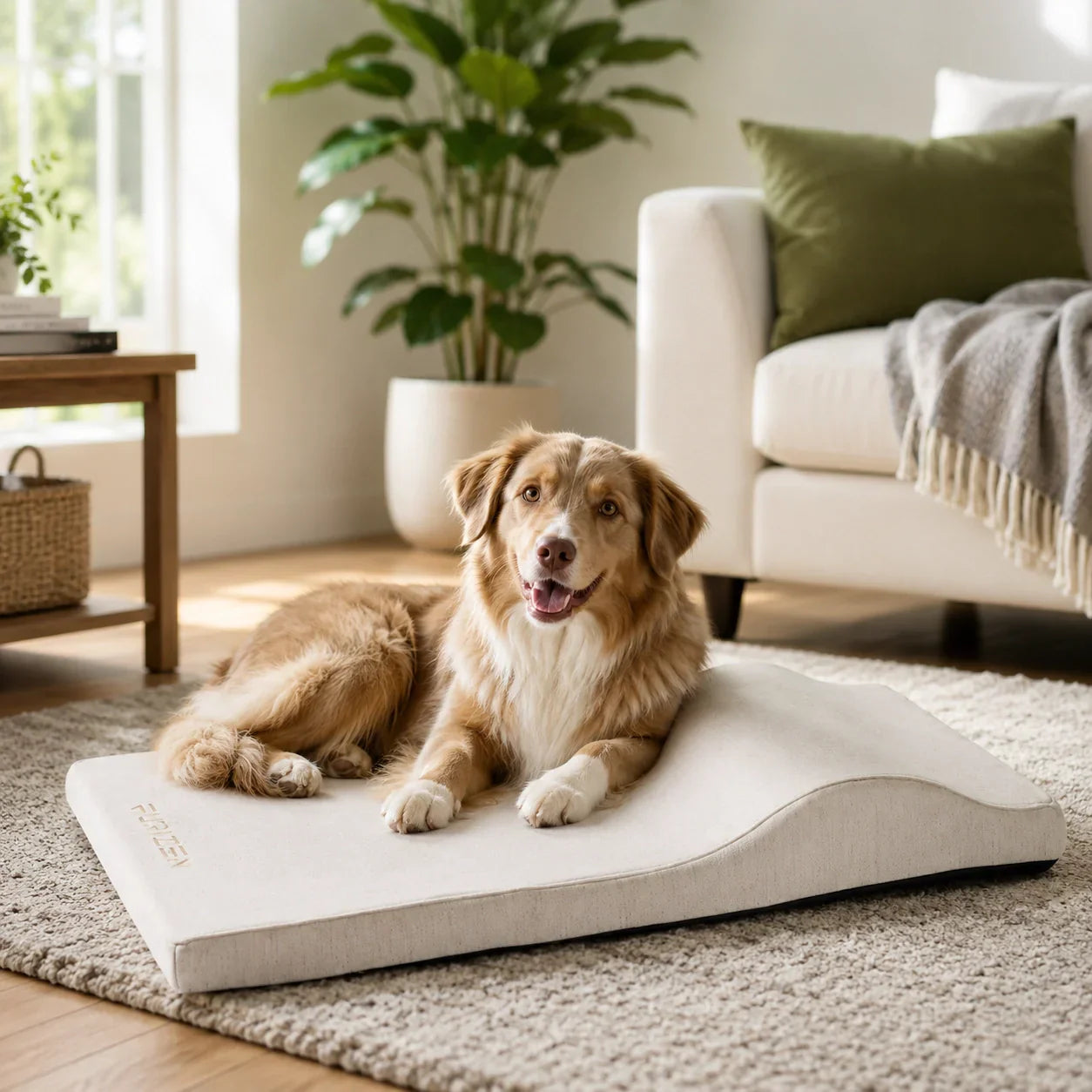
You mop the floor. You run the air purifier. You wash blankets on schedule. Still, a soft dog smell lingers in the living room, especially near the corner where your dog naps. An odor resistant dog bed matters because the smell often sits deeper than the cover. The real source can be the bed core, where moisture, skin oils, saliva, dander, and accident residue collect over time.
Quick Takeaway
- Washing the cover removes surface dirt, hair, and some odor.
- Deeper dog bed odor often comes from the inner core.
- Moisture helps odor-producing microbes persist in soft materials.
- A dry, breathable core is easier to keep fresh.
- A whole-core washable design gives dog owners a cleaner starting point than a cover-only bed.
Why Does Your Dog’s Bed Still Smell After You Wash the Cover?
If you have ever asked, “why does my dog’s bed smell after washing?”, the answer usually starts with layers.
The cover is the part you see. It catches fur, crumbs, outdoor dust, and surface oil. Washing it helps, and it should be part of every home care routine. Yet the cover is not the only part your dog touches. Heat, moisture, saliva, skin oils, urine drips, and dander can move past the outer fabric and settle into the bed core.
Foam and fiber-filled dog beds can behave like soft storage. They compress under weight, trap residue in small gaps, and dry slowly if liquid reaches the inside. Over time, a bed can look clean on the outside while the inner material keeps releasing odor into the room.
Odor is rarely a single thing. It is usually a mix of moisture, organic residue, and poor airflow. The U.S. Environmental Protection Agency notes that indoor microorganisms come from people, pets, pests, air, water, and active growth areas. The agency also identifies water or moisture as a major factor in microbial growth indoors (U.S. EPA, 2026).
That matters for dog bed odor removal because many dog owners clean the visible layer but never reach the damp, compressed material below it. A removable cover can smell fresh for a day or two, then the deeper odor comes back.
What Gets Into the Core?
A dog bed handles daily contact from a living, shedding, licking animal that spends hours in the same spot. Common odor sources include:
- Skin oils from repeated body contact
- Dander and loose hair
- Saliva from licking or chewing
- Outdoor soil and pollen
- Moisture from damp paws
- Small urine leaks or accident residue
- Food crumbs and treat residue
These materials are not always visible. They can still create smell, especially when trapped inside a dense or absorbent core.
Why Cover Washing Can Miss the Real Problem
A cover wash works at the surface. It does not rinse the core unless the bed is designed for it. If the inner material cannot be cleaned safely, dog owners are left with sprays, baking soda, sunshine, or replacement.
Those methods may reduce odor for a while. They do not remove all buildup from inside a foam core. They also depend on the core drying fully, because trapped moisture can make the smell return.
For a fresher home, the key question is not only “Can I wash the cover?” It is “Can I clean the part that holds the most residue?”
Can a Dirty Dog Bed Affect Your Dog’s Skin?
A smelly dog bed is unpleasant for people, but it can also point to a hygiene problem for the dog sleeping on it. A clean dog sleep environment matters most for dogs with sensitive skin, allergies, frequent itching, or older immune systems.
Dog beds can collect dander, dust mites, fleas, ticks, parasites, and germs. The American Kennel Club notes that buildup of dander and dust mites in dog beds may worsen allergies, especially when dogs sleep near people in bedrooms or home offices (AKC, 2026). The same article also points out that dirty sleeping spots can harbor parasites and other unwanted organisms.
For dogs, the issue is not that every dirty bed will cause disease. The issue is repeated contact. A dog lies with elbows, belly, face, paws, and hips pressed into the same surface for long periods. If that surface holds moisture and residue, skin may be exposed to irritants again and again.
Dr. Jacqueline Brister, DVM, a veterinary consultant at Embrace Pet Insurance, notes that “dogs tend to get into a variety of stinky things when they go outside to use the restroom or go for walks” (Forbes Vetted, 2025). That simple point fits daily life with dogs. Even a clean-looking dog can bring outdoor residue back to the bed.
What Can Build Up in a Dog Bed?
A dirty bed may contain a mix of irritants and odor sources:
- Dander that feeds dust mites
- Pollen from walks and yard time
- Mold spores from damp areas
- Bacteria from saliva, soil, paws, or accidents
- Flea dirt or parasite residue
- Fragrance or cleaner residue from heavy sprays
The AAHA management guidelines for allergic skin disease in dogs and cats discuss environmental allergens such as pollens, molds, and dust mites as part of allergic skin disease evaluation and management (AAHA, 2023). A dog bed is not the only source of exposure, but it can become a frequent-contact surface.
A better standard is practical: fewer odor-trapping layers, easier cleaning, fast moisture release, and materials that do not hold damp organic buildup as easily.
Signs the Bed May Be Part of the Problem
A bed is worth checking if your dog:
- Scratches after lying down
- Licks paws or belly after naps
- Has a stronger smell after sleeping
- Avoids the bed after accidents
- Chooses hard floor instead of the bed
- Has redness in contact areas
These signs can have many causes, including food allergy, fleas, infection, pain, or seasonal triggers. A veterinarian should evaluate new, severe, or persistent skin changes. A cleaner bed is not a medical treatment. It is a lower-friction home habit that supports a cleaner sleep area.
Is a Dog Bed Truly Washable If the Inner Core Stays Dirty?
The phrase “machine washable dog bed” can be misleading. Many beds mean the cover is washable, while the core must stay dry. That may be fine for a lightly used bed in a low-odor home. It is less helpful for homes with dogs that shed heavily, sleep warm, drool, have accidents, or spend time outdoors.
A truly washable inner core dog bed changes the cleaning standard. It lets you clean the part most likely to hold long-term odor.
| Bed Type | What You Can Clean | What Often Stays Behind | Odor Risk |
|---|---|---|---|
| Cover-only washable bed | Outer cover | Moisture, oils, dander, and accident residue inside the core | Higher over time |
| Spot-clean foam bed | Small surface stains | Most deep residue inside the foam | Higher after spills or accidents |
| Waterproof-liner bed | Cover and liner surface | Heat and moisture near the surface, plus aging core material | Medium, depends on airflow |
| Whole-core washable bed | Cover and inner core | Less hidden buildup if cleaned and dried properly | Lower with routine care |
The cleaning gap is easiest to see after an accident. If urine reaches a foam core, dog owners often cannot rinse the core fully without risking damage, slow drying, or deformation. The smell may fade, then return on humid days or after the dog lies on the bed again.
A washable inner core dog bed gives you a different process:
- Remove hair and loose debris.
- Wash the cover according to the care label.
- Rinse the core if the bed design allows it.
- Stand the core upright in a ventilated area.
- Let it dry fully before reassembly.
That last step matters. A bed should not be used while damp. Moisture left inside soft material can work against freshness, even if the bed was cleaned.
Why “Waterproof” Is Not Always the Same as Fresh
A waterproof liner can stop liquid from reaching the core. That can help with accidents. Yet waterproof layers may also reduce airflow depending on design. A bed that blocks liquid but traps heat and moisture near the surface may still smell stale.
For dog owners searching for the best non-toxic dog bed for odor, the better checklist includes both material safety and cleanability:
- Can the cover be washed often?
- Can the core be cleaned if odor reaches it?
- Does the core dry in a reasonable time?
- Does the design allow airflow?
- Are safety certifications or material claims clearly stated?
- Does the bed avoid heavy fragrance-based odor masking?
Fragrance can hide dog smell for a short time. It does not remove residue. For sensitive dogs, strong scents may also become another irritation point.
Why Does Air-Fiber Technology Help a Dog Bed Stay Fresher?
Odor needs conditions that let it linger. Moisture, trapped air, and organic residue create the setting. A breathable dog bed changes that setting by making it harder for dampness to stay locked inside.
Air-fiber technology uses an open, woven structure rather than a solid block of foam. The goal is physical airflow. Air can move through the core, water can pass through during rinsing, and the material can dry from more than the surface.
That does not make a bed self-cleaning. No dog bed stays fresh without care. The advantage is that cleaning can reach deeper, and drying is less dependent on a dense internal block releasing moisture slowly.
Freshness Is a Structure Problem
Most dog owners try to fight odor with more cleaning effort. They wash covers more often, spray the bed, vacuum daily, or replace beds every few months. Those steps can help, but they do not fully solve a structural problem.
A core with poor airflow can hold dampness. A core that cannot be rinsed can hold old residue. A core that compresses into a low spot can collect body oils in the same area every night.
A fresher-smelling dog home starts with the bed’s physical design:
- Open pathways let air move.
- Non-absorbent structure limits liquid storage.
- Rinseable cores allow deeper refresh.
- Full drying reduces moisture-related odor.
- Supportive shape helps avoid compressed, stale zones.
The EPA’s moisture guidance gives a useful home-care principle: keep dry areas dry and control moisture to reduce indoor microbial growth (U.S. EPA, 2026). Dog beds are smaller than walls, carpet, or drywall, but the same basic idea applies. Less trapped moisture usually means less persistent odor.
What to Look for in an Odor Resistant Dog Bed
A good odor resistant dog bed should not rely on perfume. It should make routine care easier.
Look for these features:
- Removable, machine-washable cover
- Core that can be cleaned, not only spot-treated
- Breathable internal structure
- Clear drying instructions
- Low-odor materials
- A shape that does not flatten quickly
- A cover fabric that does not cling to hair excessively
For small homes, apartments, and shared living spaces, freshness also affects how the room feels. A bed that smells clean, stays visually quiet, and does not demand constant rescue cleaning makes pet care feel calmer.
A Practical Cleaning Rhythm
A simple schedule keeps odor from turning into a deep-core problem:
- Vacuum hair weekly or more often during shedding.
- Wash the cover every 2-3 weeks, or sooner after outdoor mess.
- Rinse the core only as needed, such as after accidents, stubborn odor, or a seasonal refresh.
- Let the core dry fully before reuse.
- Avoid strong scented sprays that may bother sensitive dogs.
AKC notes that cleaning frequency depends on bed material, use, coat type, outdoor activity, and family allergies (AKC, 2026). That flexible approach is useful. A low-shedding indoor dog may need less frequent deep care than a dog that swims, hikes, rolls in grass, or has skin issues.
Less Fuss. More Bond.

A cleaner-smelling home should not depend on constant scrubbing. Zenest Ridge™ Washable Orthopedic Dog Bed is FURIZEN's odor resistant dog bed for dog parents who want a calmer alternative: a washable cover, a rinseable ZephyrTech™ air-fiber core, and a quiet shape. It includes Free Continental US Shipping, a 10-Year Bounce-Back Warranty on the ZephyrTech™ air-fiber core, and a 100-Night Sleep Trial.
FAQs
Q1: Why does my dog’s bed still smell even after I wash the cover?
Because the odor may be inside the core. Covers collect surface dirt, but foam or fiber fill can hold saliva, oils, dander, and moisture. If the core cannot be rinsed and dried, smell can return after the cover is clean.
Q2: How often should I wash a dog bed that smells?
Wash the cover every 2-3 weeks, or sooner after accidents or outdoor mess. If odor remains after cover washing, clean the core if the care label allows it. Dry every layer fully before your dog uses it again.
Q3: Is a hypoallergenic dog bed better for smelly dogs?
It can help if “hypoallergenic” means easier to clean and less likely to hold dust, dander, and moisture. No bed is allergy-proof. For sensitive dogs, choose washable materials, low fragrance, good airflow, and a dry sleep surface.
Q4: Can dog bed odor mean the inner core needs cleaning?
Yes. Persistent odor after washing the cover often points to the inner core. The smell may come from trapped moisture, oils, dander, or accident residue. A washable inner core makes deeper dog bed odor removal more practical.
Sources
- U.S. EPA (2026). The Indoor Microbiome, U.S. Environmental Protection Agency, https://www.epa.gov/indoor-air-quality-iaq/indoor-microbiome
- Johnstone, G. (2026, March 16). How to Clean Your Dog’s Bed and Why It’s Important. American Kennel Club. https://www.akc.org/expert-advice/home-living/how-to-clean-a-dog-bed/
- O'Sullivan, K. (2025, June 18). How To Clean A Dog Bed, According To Experts. Forbes Vetted. https://www.forbes.com/sites/forbes-personal-shopper/article/how-to-clean-a-dog-bed/
- AAHA (2023). 2023 AAHA Management of Allergic Skin Diseases in Dogs and Cats Guidelines, American Animal Hospital Association, https://www.aaha.org/wp-content/uploads/globalassets/02-guidelines/2023-aaha-management-of-allergic-skin-diseases-in-dogs-and-cats-guidelines/resources/2023-aaha-management-of-allergic-skin-diseases-guidelines.pdf
Share:
The Best Dog Beds for Senior Dogs: Protect Your Dog As They Age
Choosing the Best Waterproof Dog Crate Pad for Durability and Comfort